The sites that take no rig at all
· 4 min · CampsiteFit
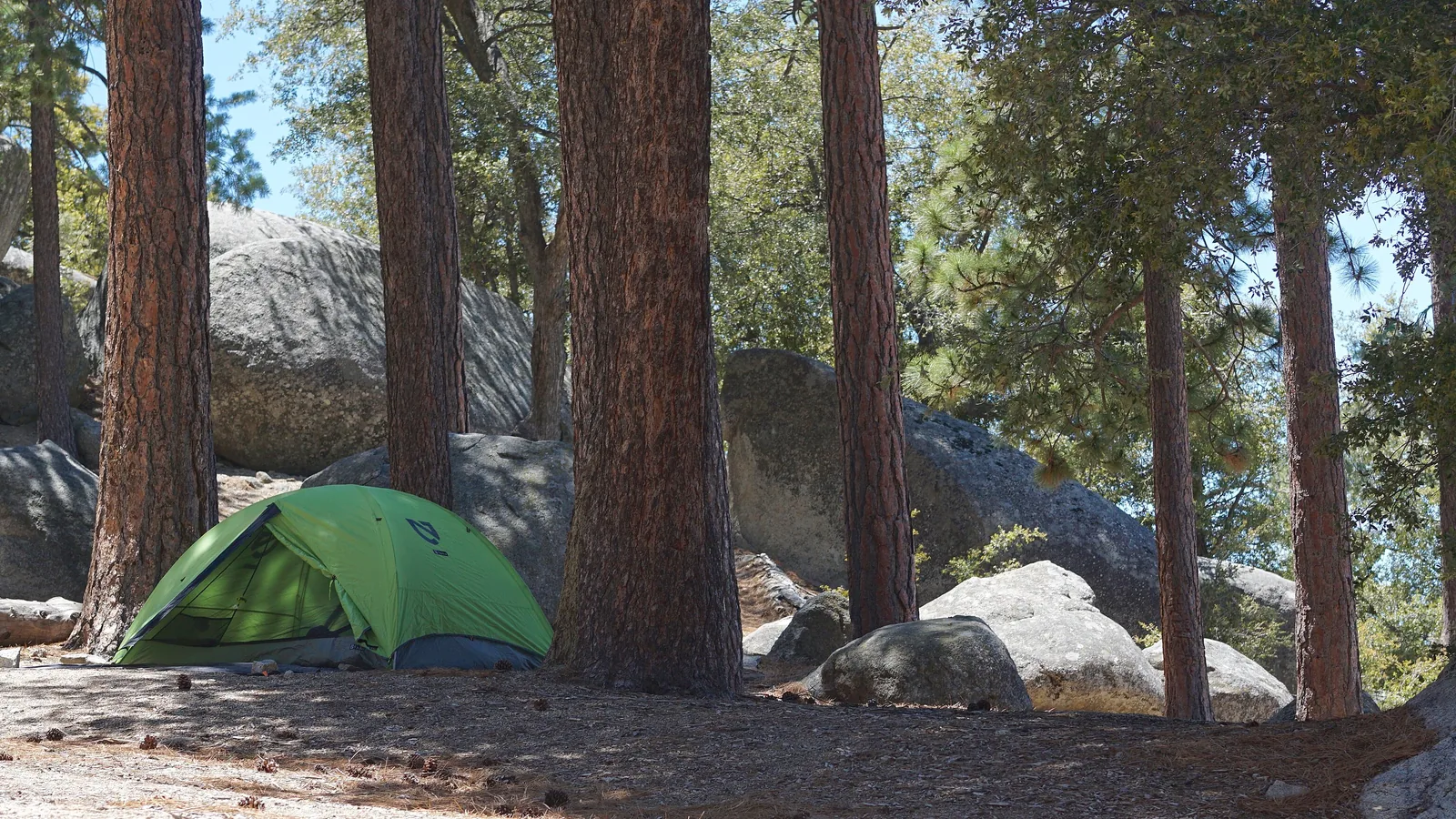
There is a category of campsite that no length filter should ever return, and almost every listing returns it anyway.
Recreation.gov publishes, per campsite, a list of the equipment permitted there. Some sites name a motorhome, a trailer, a fifth wheel. Some name a tent and nothing else. Some name a horse. 16,129 bookable federal campsites name no rig of any kind, across 1,484 campgrounds, and for those sites the answer to "will my rig fit" is not a number. It is no.
The trap is that they still carry a measurement
A site that permits only tents is still a site, and the agency still measured its driveway. 5,631 of those sites publish a driveway length.
That number is real. It is also not a rig limit, and reading it as one is how a filter comes to say a tent-only site takes a 30 ft trailer.
Moraine Park in Rocky Mountain National Park is the clearest case in the country. It has 154 bookable sites that permit no rig, and 151 of them publish a driveway length. The longest reads 75 ft. A filter that takes the driveway as the limit will hand you a 75 ft answer for a site you may not bring a rig to at all.
Why a driveway exists at a tent site
Because you still drive there. You park, you carry your gear to the pad, and the car sits on the gravel where the agency took the measurement. The number describes the parking, honestly and usefully, and it answers a different question from the one a person towing is asking.
This is the shape of nearly every error we have found in this data. The figure is accurate. The field it sits in means something specific. The mistake happens downstream, when someone reads it as an answer to a question it was never about. A driveway at a site that does take rigs fails the same way, for the same reason.
What this site does with them
A campsite whose permitted-equipment list names no rig is marked as permitting no rig, and carries no length at all: not the driveway, not the vehicle length, nothing. It cannot appear in a result for a 20 ft rig or a 45 ft one, because the honest answer is neither.
That costs coverage deliberately. It removes those sites from every length answer here, and it buys the right thing: a search that returns a campsite you cannot use has cost you a booking window and possibly a tow.
The category shows rather than hides. On a campground page those sites appear under "Tents only, no rig permitted here", with their number, so you can see how much of a campground is closed to you before you decide the campground is. A 200-site campground where 154 are tent-only is a different place from a 200-site campground where none are.
The four with the most of them
These are the campgrounds where the tent-only share is large enough to change whether the campground is worth your drive:
| Campground | Tent or horse only | Bookable sites |
|---|---|---|
| Tuolumne Meadows, Yosemite | 169 | 284 |
| Moraine Park, Rocky Mountain | 154 | 236 |
| Cosby Campground, Great Smoky Mountains | 134 | 157 |
| Lodgepole Campground, Sequoia | 105 | 201 |
Cosby Campground is the sharpest case. 134 of its 157 bookable sites permit no rig, so a listing that shows one length for the campground is describing 23 sites and saying nothing about the other 134. Hodgdon Meadow Campground in Yosemite is the same shape at a smaller scale.
Horses count too
552 of the no-rig sites are equestrian. They are not a rounding error and they are not a mistake in the data: a horse camp is a real thing with real sites, corrals, and a permitted-equipment list that names a horse and not a fifth wheel.
Some horse camps do take rigs, and where the source says so, this site says so. The rule is not "equestrian means no". The equipment list decides, every time, per site.
The general rule
Naming equipment is a positive statement. When a source lists what is permitted at a site and a rig is not among it, that is not missing information. It is information, and it says no.
The opposite case, a site that names no equipment at all, is genuinely unknown, and this site treats it that way: shown as "not published", never counted as fitting, never counted as not fitting. The same logic keeps 4,196 hike-in and boat-in sites out of every rig answer.
The equipment lists behind these counts come from the Recreation Information Database, which is public domain, and every campground page links to the record it was built from. How it is measured sets out the rule.