Season is the field nobody publishes
· 5 min · CampsiteFit
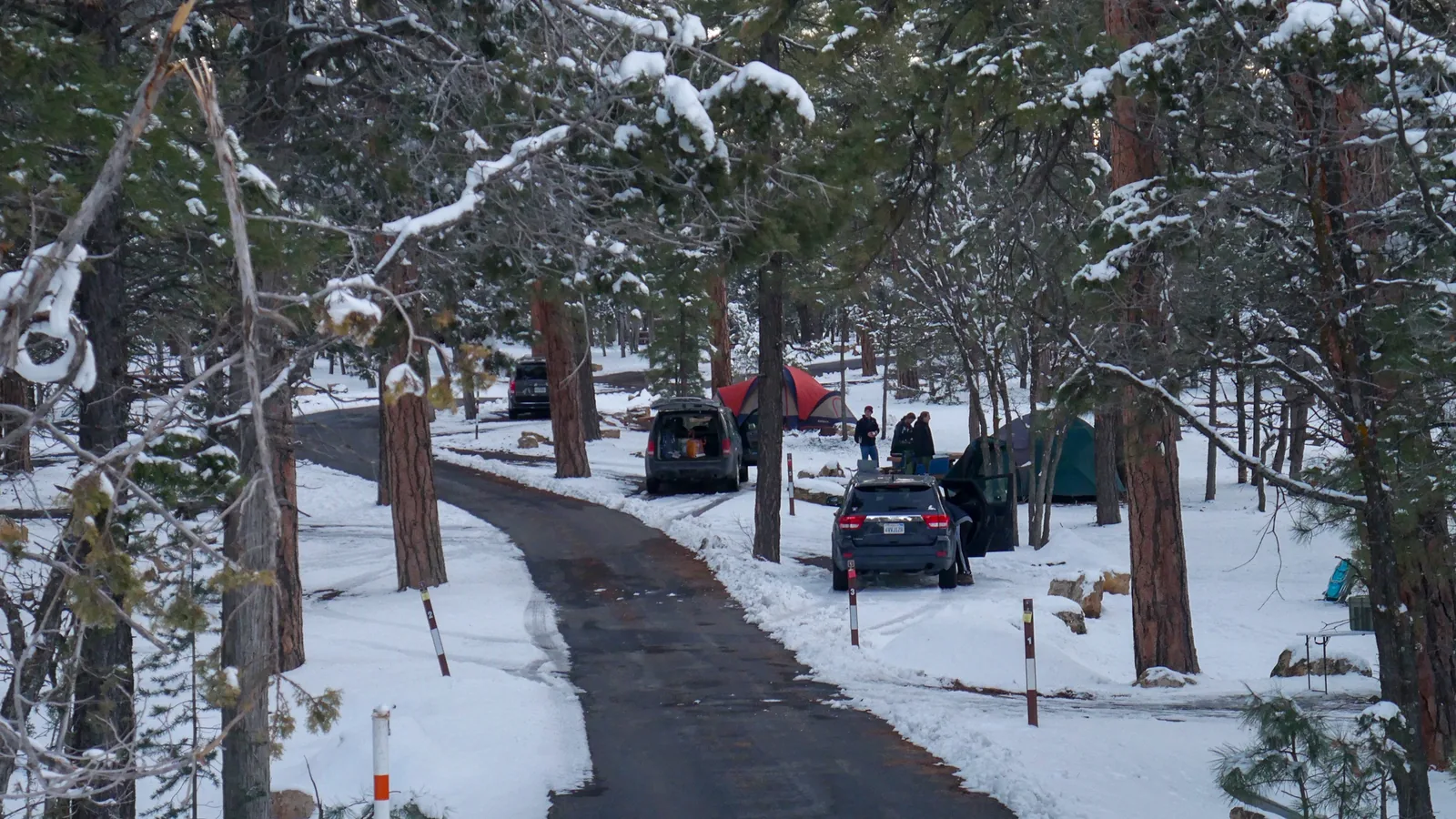
A campground at 9,000 ft that opens in July is a different place from the same campground in May. For anyone planning a trip around a rig, opening dates matter at least as much as length, and this site knows them for 126 of 2,878 published campgrounds. Under five in a hundred.
That is not a backlog item. It is what the source contains, and the gap is worth explaining because the obvious ways to close it are all worse than the gap.
Where the 143 come from
The reservation data has no season field. What it has is prose (a description, a directions paragraph, a fee note) and sometimes that prose says something committal: "open from mid-May through September", "available year-round".
A pattern extracts those, and each extracted fact stores the exact sentence that supports it, verified to be literally present in the source before anything reaches a page. If the quote cannot be found in the document, the fact does not exist.
The same machinery produces road-access warnings for 202 campgrounds, of the high-clearance recommended and not suitable for trailers sort, from the same prose under the same rule.
Why not just read the rest with a model
Because the tool that finds the sentences also counts the ones it cannot parse, and reading those is what settled it.
It reports 566 campgrounds whose text contains season-ish wording without usable dates, and that number was quoted internally for days as the size of the opportunity. Twelve consecutive samples contained no campground season at all:
- "the reservation fee varies by location" — a refunds policy
- "accessed by floatplane, boat or kayak, depending on conditions"
- "Refunds will not be issued for naturally occurring events like rain, snow, wind"
- "White Pass Ski Area … offering deeper snow, a longer ski season"
- "many homes and seasonal recreational residences" — private houses on a shoreline
Narrowing to text with a real month and a word about availability leaves 63 worth a human reading. Not 566.
The part that decides it
Among those, the most obvious mechanical win is holiday anchors — American campgrounds say "Memorial Day through Labor Day" far more often than they give a date. Twenty-five campgrounds use one. Read them:
| the sentence | what it is about |
|---|---|
| sites available between Memorial Day and the end of September | the campground |
| available for reservations from Memorial Day through October | the lookout |
| the Visitor Center, open weekends from Memorial Day | the visitor centre |
| the only area with a restaurant, open daily from Memorial Day | the restaurant |
| Site #1 is used by the host from mid-May to Labor Day | the camp host |
| Drinking water, flush toilet and showers are available … mid-June to Labor Day | the plumbing |
| the campground … does not close on the major holidays, i.e. Memorial Day | the opposite of a closure |
Roughly three in eight are about the campground. The rest are a restaurant, a visitor centre, a camp host and a water system, plus one sentence saying a campground stays open, which a careless reader would publish as a closure.
A quote proves the sentence exists. It does not prove the sentence is about the campground. That is the whole difficulty, and it is why a language model makes this worse rather than better: it reads fluently, produces a confident quotable span, and has no way to know that "the only area in the park with a restaurant" is not this campground. The pattern-matcher, being stupid, carries an explicit list of subjects that are not the season (visitor centre, restaurant, store, marina, boat launch) and refuses them by name.
The 143 that do say
Where the prose commits, the campground page shows the sentence it came from:
| Campground | State | What the source says |
|---|---|---|
| Buffalo Park | Virginia | open May 1 – September 30 |
| Wheeler Gorge | California | open March through November |
| Saddlehorn Campground | Colorado | Loop B is open year-round |
| Assateague Island | Maryland | the campground is open year-round |
Saddlehorn Campground is the useful shape of this. Loop B is open year-round, which is a claim about one loop and not about the campground, so it is published as the sentence rather than as a date range for the property. Cades Cove Campground in Tennessee and Ratcliff Lake Recreation Area in Texas carry theirs the same way.
What we will not do
Scrape the forest announcement pages. That is where the real dates live, and
fs.usda.gov returns 403 for robots.txt. A site that will not serve one has not
granted permission, and rendering the page in a browser to get around that is
the same request wearing a costume.
Infer a season from elevation. It would be easy, it would be right often enough to look good, and it would be an invented fact on a site whose entire argument is that it does not invent facts. The elevation figures we do publish turn out to predict less than they look like they do in any case.
Show last year's dates. A season is a claim about a specific year, and an undated one is worse than none.
So the honest position is 6.8%, said out loud rather than filled in, and recorded as a sourcing decision rather than an omission, because more effort would not fix it. The same rule keeps a driveway measurement from standing in for a rig limit it was never about.
The 126 seasons and the 202 access notes both carry the sentence they came from, and every campground page shows that sentence beside the fact. How it is measured explains what has to be true before either one gets published.