Pull-through against back-in
· 4 min · CampsiteFit
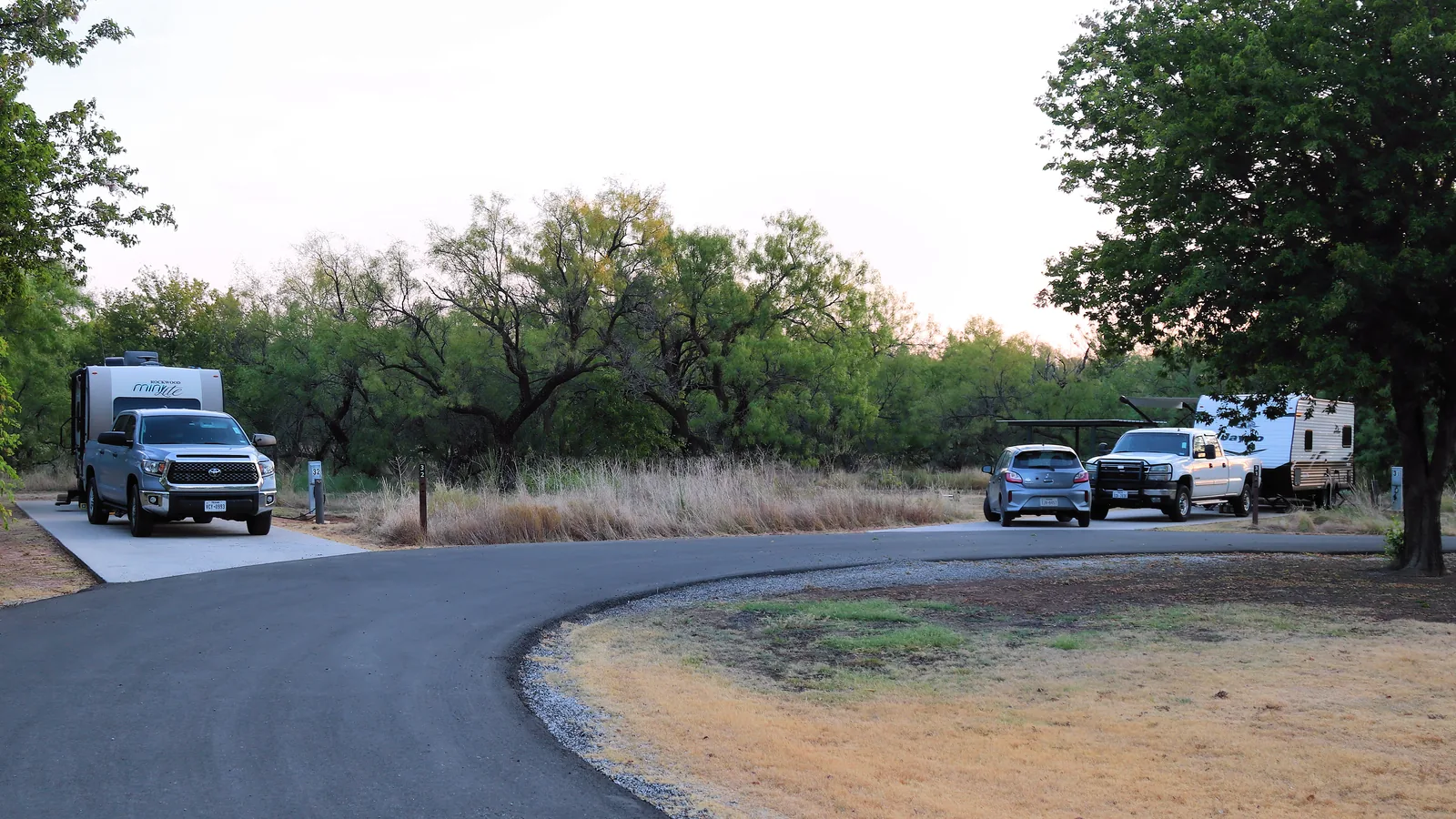
A pull-through is the site everyone tows toward. You drive in one end and out the other, you never reverse an articulated rig between two trees, and the received wisdom holds that it is the big-rig option.
Across all 115,000-odd bookable federal campsites, the numbers point the wrong way entirely.
| entry | sites | take 38 ft |
|---|---|---|
| Back-In | 80,776 | 50.8% |
| Pull-Through | 11,814 | 49.5% |
| Parallel | 2,180 | 15.4% |
The pull-through is behind, by a point and a bit. On that reading, filtering for pull-throughs would cost you seven eighths of the corpus to buy nothing at all — and would apparently make things slightly worse.
Inside one agency at a time, it is a different table
| back-in | pull-through | gap | |
|---|---|---|---|
| Forest Service | 39.6% | 52.6% | +13.0 |
| National Park Service | 17.4% | 28.4% | +11.0 |
| Corps of Engineers | 75.8% | 64.5% | −11.3 |
At the Forest Service a pull-through is a third likelier to take your rig. At the Park Service it is well over half again as likely, 28.4% against 17.4%, which is the difference between a shortlist and nothing.
And at the Corps of Engineers it runs the other way.
Why the aggregate said nothing
The Corps has 31,045 back-in sites in this corpus and 3,402 pull-throughs, and its back-ins are the most generous sites in the country at 75.8%. That one enormous, unusually good back-in population is most of the "Back-In" row in the first table, and it drags the overall back-in figure up to meet a pull-through figure it has nothing to do with.
The aggregate is not wrong. It answers a question nobody asks: if you picked a federal campsite at random, would entry type predict fit? What you want to know is whether, at the campground in front of you, the pull-through is the better bet. There the answer is usually a clear yes, and the question comes up often: 1,225 of the 2,321 campgrounds that record an entry type at all have both kinds on the property, so more than half the time you are choosing between them rather than between campgrounds.
Why the Corps reverses
A guess, and labelled as one: the corpus holds no construction dates, so this is not something it can prove.
Corps campgrounds were laid out around reservoirs on graded ground, and their back-ins are already long, 51 ft on average. Their pull-throughs average 53 ft, barely more. But the share clearing 38 ft is lower, which means the pull-throughs vary more: a set that includes older, shorter loops as well as newer long ones.
Where back-ins are already generous, a pull-through stops being the thing that buys you length. It buys you not reversing, which is worth something and is not the same thing.
Where the pull-throughs actually are
If the pull-through is what you want, these are the campgrounds that have the most of them in a length that takes a 38 ft fifth wheel:
| Campground | State | Pull-throughs taking 38 ft |
|---|---|---|
| Island Park | California | 45 of 50 |
| Loft Mountain Campground | Virginia | 34 of 132 |
| Wallace Creek | Mississippi | 33 of 33 |
| Mustang Ridge Campground | Utah | 31 of 38 |
| Canyon Point | Arizona | 30 of 32 |
Loft Mountain is the one to read carefully. It has by far the most pull-throughs on the list, 132 of them, and only a quarter clear 38 ft: a campground that would look ideal in a filter for entry type and disappoint you on arrival. Wallace Creek has 33, and every one of them fits.
What to take from it
- A pull-through is easier to get into, which is a different thing from longer, and at one operator it is not longer at all.
- Filter on length, then prefer a pull-through among what is left. Choosing entry type first throws away seven eighths of the corpus for a benefit that depends entirely on who runs the campground.
- Parallel sites are the real signal, at 17.7%. If a site says parallel and you tow anything substantial, read the number carefully.
Every listing here shows the entry type beside the length, per site, so you can read the two together instead of letting one stand in for the other. The same warning applies to the campground's advertised maximum, which is one site's number wearing the whole property's name.
The entry types and the lengths both come from the Recreation Information Database, which is public domain, and every campground page links to the record its rows were built from. How it is measured sets out which number answers for which rig.